
Field Notes
Water Resistance, Explained: What the Numbers Really Mean
30 meters does not mean 30 meters. A plain-English guide to the ratings on the back of your watch.
By the Tomi Lord Atelier · July 29, 2026 · 4 min read

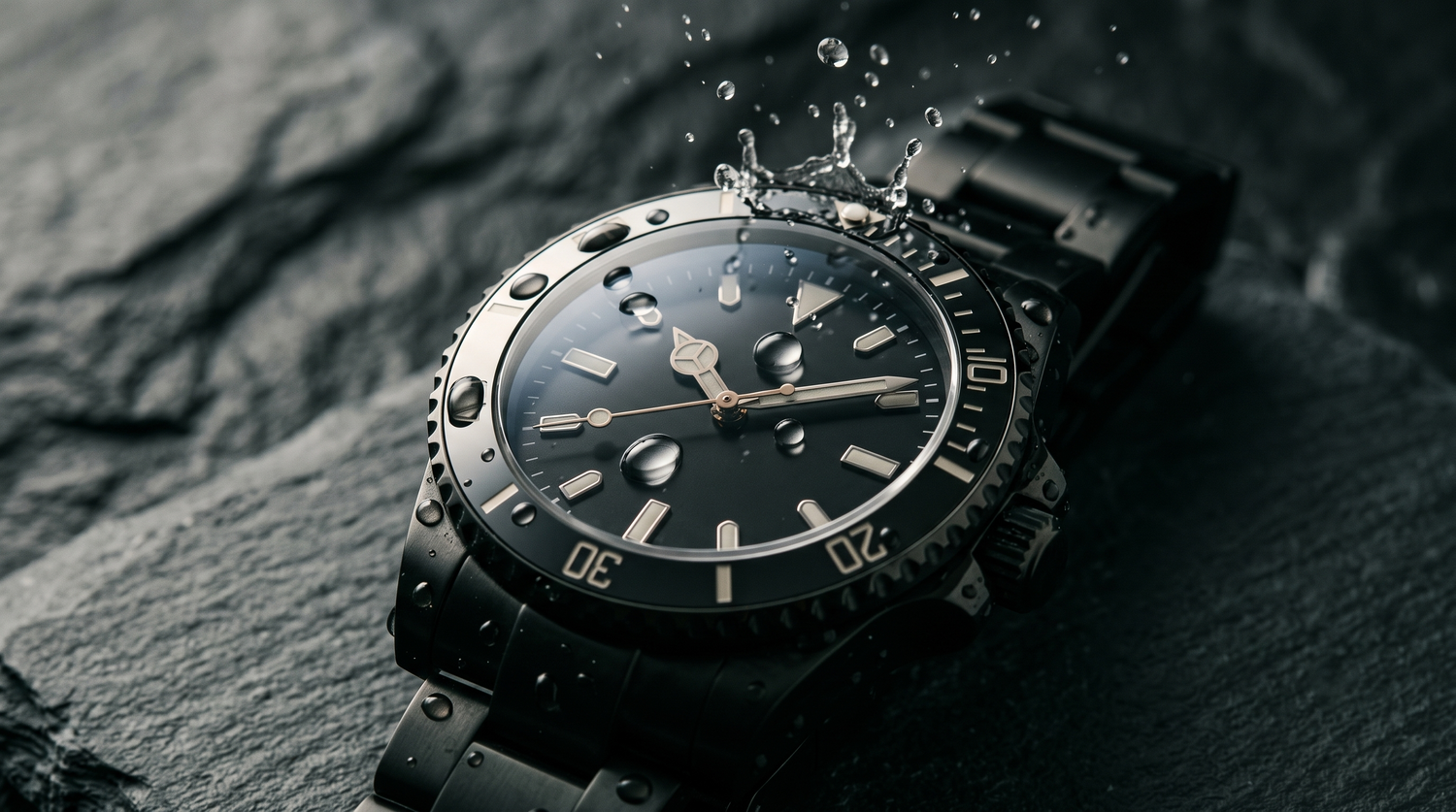
Few watch specs are more misunderstood than water resistance. The figure printed on the case — 30m, 50m, 100m — reads like a diving depth, but it is nothing of the kind. Read it the wrong way and you can ruin a watch by simply doing the dishes.
Why the numbers seem to lie
Those ratings come from a static pressure test in a lab, not from swimming. Real life adds motion, temperature swings, and aging seals — all of which lower the true limit. That is why a "30m" watch is not meant for any swimming at all, and why the printed number should always be read conservatively.
The quick reference
3 ATM / 30m — splashes and rain only; keep it out of the sink. 5 ATM / 50m — a quick hand-wash, brief contact with water. 10 ATM / 100m — swimming and snorkeling. 20 ATM / 200m+ — serious water sport and diving. Whatever the rating, never operate the crown underwater and never wear a watch in a hot shower or sauna — heat is what actually breaks the seals.
Treat 30 meters as "don't drop it in the sink," and you will never be caught out.
Looking after the seal
The gaskets that keep water out are rubber, and rubber ages. If you swim with your watch, have the seals pressure-tested every year or two. Always push or screw the crown fully home before any contact with water, rinse off salt or chlorine afterward, and dry the case. A little care here is the difference between a watch that lasts a decade and one that fogs up in a season.
A Tomi Lord is built for the rhythm of a day — rain, a spill, a washed hand.
Explore the Collection →
Leave a comment
This site is protected by hCaptcha and the hCaptcha Privacy Policy and Terms of Service apply.