
Field Notes
The Anatomy of a Watch: A Field Guide to the Dial
Learn the handful of words that let you read — and talk about — any watch.
By the Tomi Lord Atelier · July 8, 2026 · 4 min read

Every watch, from the humblest to the grandest, is built from the same short vocabulary. Learn a dozen words and the whole object opens up — you stop seeing "a watch" and start seeing the choices inside it.
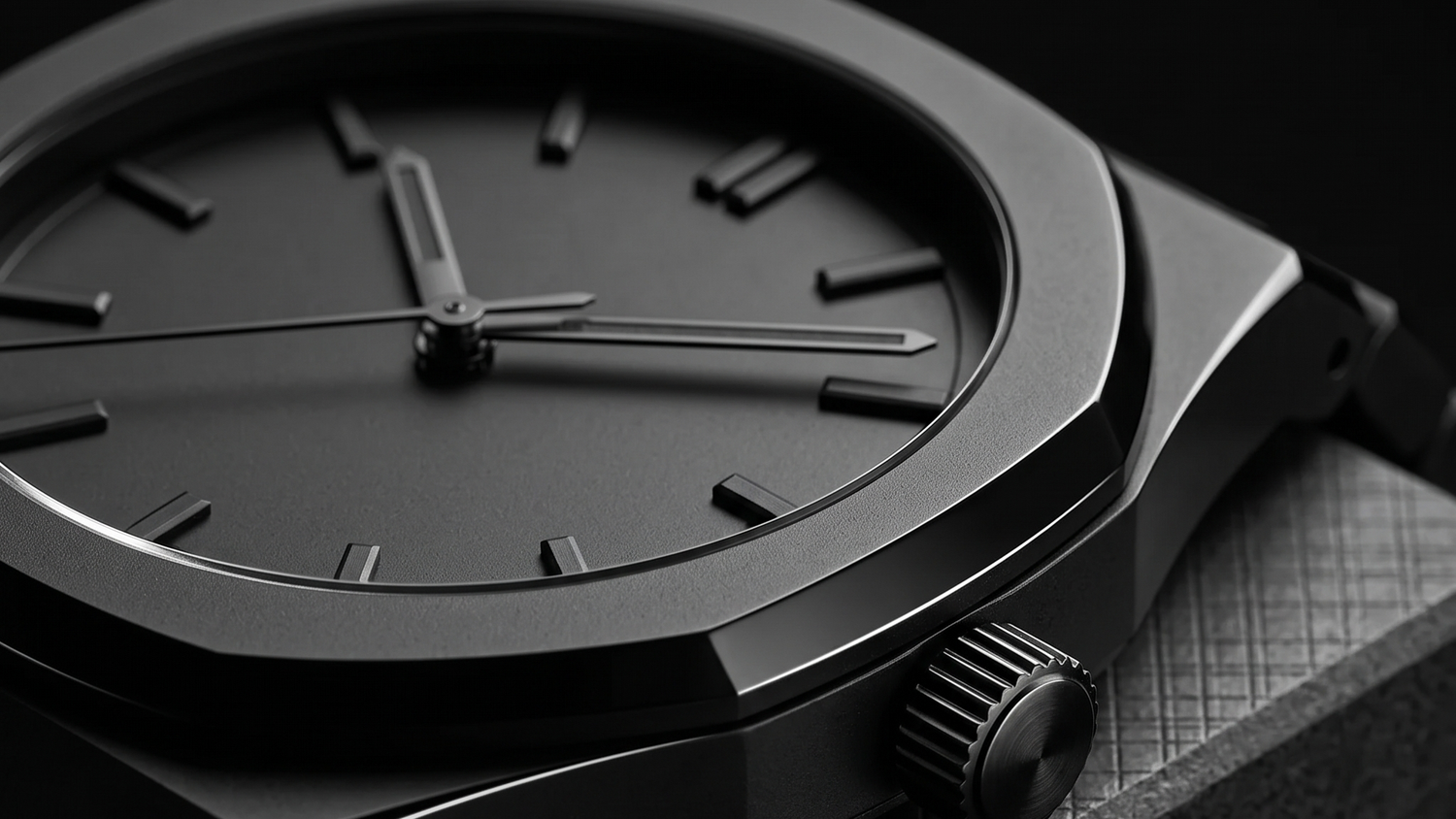
The face: dial, indices, hands
The dial is the face of the watch — everything you read sits on it. The indices (or markers) stand in for the numbers around the edge, and the hands sweep over them to show hours, minutes, and seconds. A small inset counter is a sub-dial. A minimalist watch is simply one that keeps this list short.
The body: case, bezel, crown, lugs
The case houses the movement and gives the watch its size. The ring framing the crystal is the bezel. The small knob on the side is the crown, used to set the time and wind the watch. The lugs are the arms that hold the strap, and the flat back panel is the caseback.
Once you can name the parts, you start to see the difference between watches — and the difference in price.
Why the words matter
Knowing the vocabulary is not trivia — it is how you buy better. You can tell an applied index from a printed one, judge whether the lugs will fit your wrist, and describe exactly what you like instead of pointing. Minimalist design takes this same anatomy and removes everything that does not need to be there, leaving only the parts that earn their place.
Everything essential, nothing spare — see it on a Tomi Lord.
Explore the Collection →
Leave a comment
This site is protected by hCaptcha and the hCaptcha Privacy Policy and Terms of Service apply.